Neutral Protease Process Conditions: pH, Temperature, Time, and Deactivation
Practical process guidance for Neutral Protease: operating pH, temperature, contact time, dosing trials, deactivation, and quality controls for industrial applications.
Industrial-grade supplyMulti-application formulationBatch documentation on requestGlobal logistics, 180+ countries
01
Technical Overview
Neutral Protease Process Conditions: pH, Temperature, Time, and Deactivation
Neutral Protease is selected when a process needs controlled protein hydrolysis without pushing the system into strongly acidic or alkaline conditions. For formulation, procurement, and plant teams, the value is not only catalytic performance. The value is predictable behavior inside a real process window: pH drift, heat history, substrate variability, hold time, mixing quality, and downstream stop conditions.
This guide outlines practical starting points for process development. It is intended for industrial screening and scale-up planning, not as a replacement for validation on your own substrate and equipment.
Operating principle: controlled hydrolysis near neutral pH
Neutral Protease cleaves peptide bonds in proteins and protein-rich substrates, generating smaller peptide fractions and improving solubility, extractability, texture, or downstream processing characteristics depending on the application.
The key process advantage is balance. Near-neutral operation can reduce corrosion pressure, limit extreme pH correction steps, and preserve other sensitive ingredients that may be damaged under harsher hydrolysis conditions.
Common industrial objectives include:
Protein solubilization and liquefaction
Viscosity reduction in protein-rich slurries
Peptide generation for functional or nutritional systems
Improved extraction from plant, animal, microbial, or fermentation-derived materials
Process smoothing before separation, filtration, drying, or blending
Recommended pH window
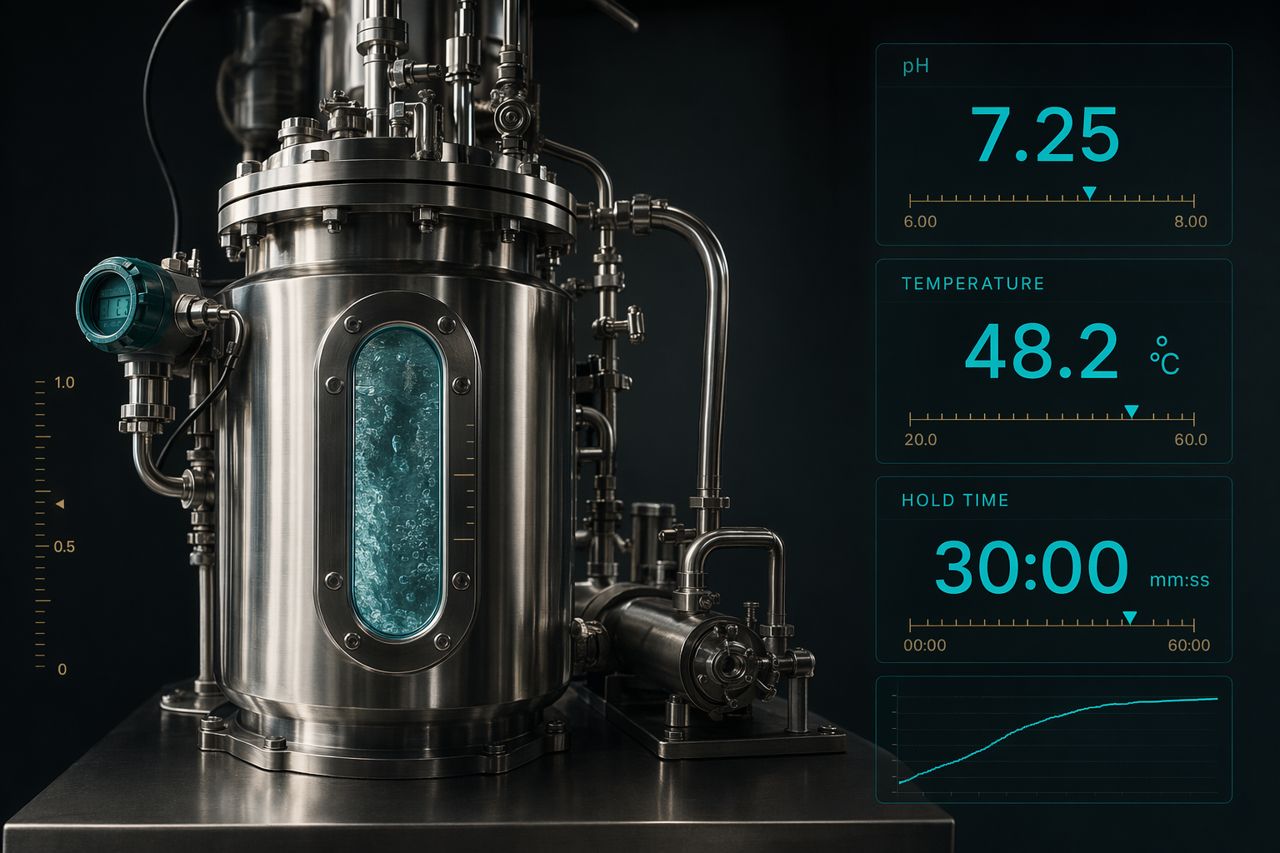
Neutral Protease is typically evaluated around the neutral range, with many processes beginning between pH 6.0 and 8.0. The practical optimum depends on substrate, buffer capacity, salts, solids level, and the specific production lot supplied.
How to set pH during screening
Start with a narrow matrix rather than a wide uncontrolled sweep:
Screen at three pH points around your target process condition.
Measure both initial pH and final pH after hydrolysis.
Track pH drift caused by released peptides, minerals, acids, or process water.
Avoid judging performance only from the initial pH; the enzyme experiences the full process curve.
For many buyers, the most useful condition is not the absolute peak response. It is the pH point that delivers stable performance while minimizing chemical correction, foaming, salt load, and downstream adjustment.
Temperature window and heat history
Temperature determines both reaction speed and enzyme lifetime. A warmer process may hydrolyze faster, but it may also shorten the active window or create uneven results if heat transfer is poor.
For early development, many teams evaluate Neutral Protease in a moderate industrial temperature range, often around 35 to 55 °C. The best setpoint should be selected by comparing conversion, sensory or functional targets, filtration behavior, microbial control strategy, and deactivation requirements.
Practical temperature controls
Preheat the substrate before adding enzyme when possible.
Avoid adding enzyme directly into localized hot zones.
Confirm that the tank probe reflects the bulk liquid, not only jacket temperature.
Record ramp-up time separately from hold time.
Validate performance at minimum and maximum expected plant temperatures.
In scale-up, small temperature gradients can create inconsistent hydrolysis. Mixing and heat transfer are therefore part of enzyme control, not separate engineering details.
Contact time: define the endpoint, not only the clock
Neutral Protease reactions are commonly managed by time, but the real endpoint should be based on the product attribute you need. Depending on the application, that may be solubility, viscosity, extract yield, filtration rate, peptide profile, bitterness risk, emulsification behavior, or downstream drying performance.
A screening study should include several time points under fixed pH and temperature. This creates a reaction curve and helps identify where performance begins to plateau. The plateau is often commercially important: additional reaction time may consume tank capacity without delivering meaningful benefit.
Time-point design
A compact study may include:
An untreated control
An early reaction point
A mid-point near expected performance
A longer hold to identify plateau or over-hydrolysis
A deactivated final sample for downstream evaluation
Do not optimize time in isolation. A shorter, warmer reaction and a longer, cooler reaction may produce different peptide distributions even if a single headline measurement appears similar.
Dosage guidance for first trials
Dosage should be treated as a process variable, not a fixed catalog number. The right addition level depends on protein concentration, substrate accessibility, solids loading, inhibitors, salts, target degree of hydrolysis, and residence time.
For first trials, use a small dosage ladder around the expected commercial range supplied with your quotation and technical documentation. Keep pH, temperature, solids, and time fixed while changing only enzyme addition. This allows the team to see whether the process is enzyme-limited, substrate-limited, or already near a practical plateau.
Signs dosage is too low
Slow viscosity reduction or incomplete liquefaction
Low soluble protein or peptide release
Poor repeatability when substrate lots change
Need for excessive hold time to hit specification
Signs dosage may be too high
No meaningful gain at higher addition levels
Over-hydrolysis against texture or flavor targets
Increased downstream correction cost
Unnecessary enzyme cost without throughput benefit
The most economical dose is usually not the maximum response point. It is the dose that meets the product target with reliable margin under real plant variation.
Mixing, solids, and substrate accessibility
Neutral Protease can only act where it can contact available peptide bonds. In high-solids systems, the limiting factor may be hydration, particle size, dispersion, or mass transfer rather than enzyme concentration.
Control these variables during development:
Order of addition: hydrate and disperse substrate before enzyme addition when appropriate.
Particle size: coarse particles may slow access and create long tails in the reaction curve.
Solids level: higher solids can improve plant economics but reduce mixing efficiency.
Agitation: avoid dead zones, surface crusting, and air entrainment.
Salt and minerals: ionic strength can shift performance and protein behavior.
When transferring from lab to plant, match mixing intent rather than simply matching time. A bench sample with intense mixing may overstate plant performance if the full-scale vessel has slower turnover.
Deactivation: stop the reaction deliberately
A protease process needs a defined stop condition. If Neutral Protease remains active after the target endpoint, it may continue changing viscosity, texture, peptide profile, or storage behavior.
Thermal deactivation is commonly considered, but the right approach depends on formulation, heat tolerance, equipment, residence time, and downstream steps. In some processes, deactivation is integrated into pasteurization, cooking, evaporation, drying, or a dedicated heat hold.
Deactivation planning checklist
Confirm the product can tolerate the proposed heat exposure.
Validate that the coldest point in the system reaches the intended condition.
Consider viscosity changes during heating and cooling.
Take samples before and after deactivation to verify the stop point.
Confirm no unwanted activity remains during storage or downstream holding.
If heat treatment is not practical, discuss alternative process stops during technical qualification. The stop method must be compatible with the final application and regulatory route.
Compatibility considerations
Neutral Protease should be checked against the complete process environment, not only water and protein.
Review compatibility with:
Preservatives, antioxidants, chelators, and reducing agents
High salt or mineral systems
Surfactants and emulsifiers
Residual cleaning chemicals
Other enzymes used in the same process
Metal contact surfaces and process aids
If multiple enzymes are used, sequence matters. A carbohydrase, lipase, or another protease may change substrate structure before Neutral Protease is added. In some cases, simultaneous addition is efficient; in others, staged addition improves control.
Quality assurance points for buyers
For procurement and technical teams, reliable supply is built on documentation as much as performance. Before approving Neutral Protease for production, align on the quality package required for your market and application.
Typical buyer review items include:
Product specification and physical form
Lot-to-lot consistency expectations
Storage and shelf-life guidance
Allergen, dietary, or origin statements where applicable
Food, feed, detergent, or technical-use suitability as relevant
Microbiological and contaminant control documentation
Packaging format and handling requirements
Change notification expectations
The correct documentation set depends on the end use. A processing aid for food, a feed additive, and a technical processing enzyme may require different qualification routes.
Storage and handling
Maintain Neutral Protease according to the supplied storage guidance. In general, enzymes should be protected from unnecessary heat, moisture, and contamination. Keep containers sealed when not in use, avoid returning exposed material to the original pack, and implement controlled weighing or dosing procedures to reduce airborne dust and operator exposure.
For liquid handling, prevent cross-contamination with cleaning solutions, extreme pH streams, or hot recirculation lines. For dry handling, manage dust, humidity, and segregation from incompatible raw materials.
Suggested development workflow
A practical qualification sequence is:
Define the product target and unacceptable failure modes.
Run a pH and temperature screen on the real substrate.
Build a time curve at the best two conditions.
Run a dosage ladder at the preferred condition.
Validate mixing and heat transfer assumptions at pilot scale.
Confirm deactivation and downstream stability.
Lock the process window and procurement specification.
This sequence prevents the common mistake of optimizing enzyme addition before the reaction environment is stable.
What to share for pricing and technical fit
To quote the right Neutral Protease grade and packaging format, share the following if available:
Application and end market
Substrate type and approximate protein level
Target pH, temperature, and process time
Batch size or annual demand estimate
Desired product form and packaging preference
Required documentation or compliance route
Current pain point: speed, yield, viscosity, cost, flavor, filtration, or consistency
Request a quote or process-fit review
Use the form below to request pricing or a technical fit discussion. The Aequion team will review the application context and respond with the appropriate next step.