
Application
Neutral Protease for Textile Wool and Protein Fiber Treatment
Controlled neutral protease treatment for wool and protein-fiber textile finishing, cleaning, surface modification, process control, compatibility screening, and B2B supply.
Application
Controlled neutral protease treatment for wool and protein-fiber textile finishing, cleaning, surface modification, process control, compatibility screening, and B2B supply.
Neutral Protease (Neutral Proteinase) is used in selected textile processes where mills need controlled modification of wool or other protein-fiber surfaces under relatively mild conditions. For B2B finishing teams, the value is not “more enzyme” — it is a narrower, more predictable treatment window that supports hand-feel, surface cleanliness, reduced fuzz, and consistent downstream finishing response.
Aequion supplies neutral protease for formulation teams, textile auxiliaries producers, and mills that need a practical enzyme input with clear application boundaries, repeatable documentation, and support for process validation.
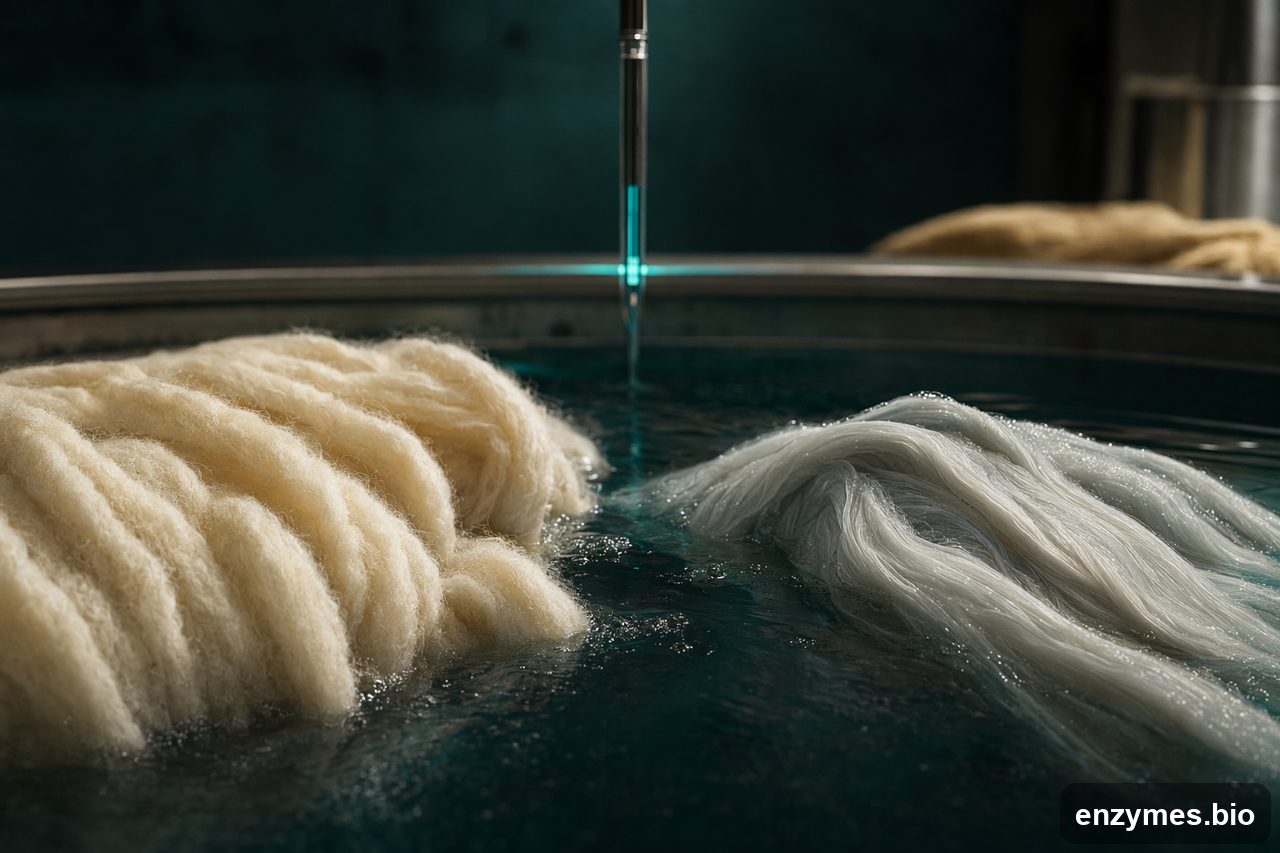
Neutral protease can be evaluated in protein-fiber finishing or cleaning steps where the target is exposed surface protein rather than bulk fiber destruction.
Typical evaluation areas include:
This application should be designed around fiber preservation. The objective is selective surface action with acceptable tensile retention, dimensional stability, shade control, and handle.
Protein fibers are sensitive materials. Aggressive chemical treatment can solve one surface problem while creating another: strength loss, harsh hand, shade drift, yellowing risk, or rework.
Neutral protease offers a more controlled route when the process can be managed carefully:
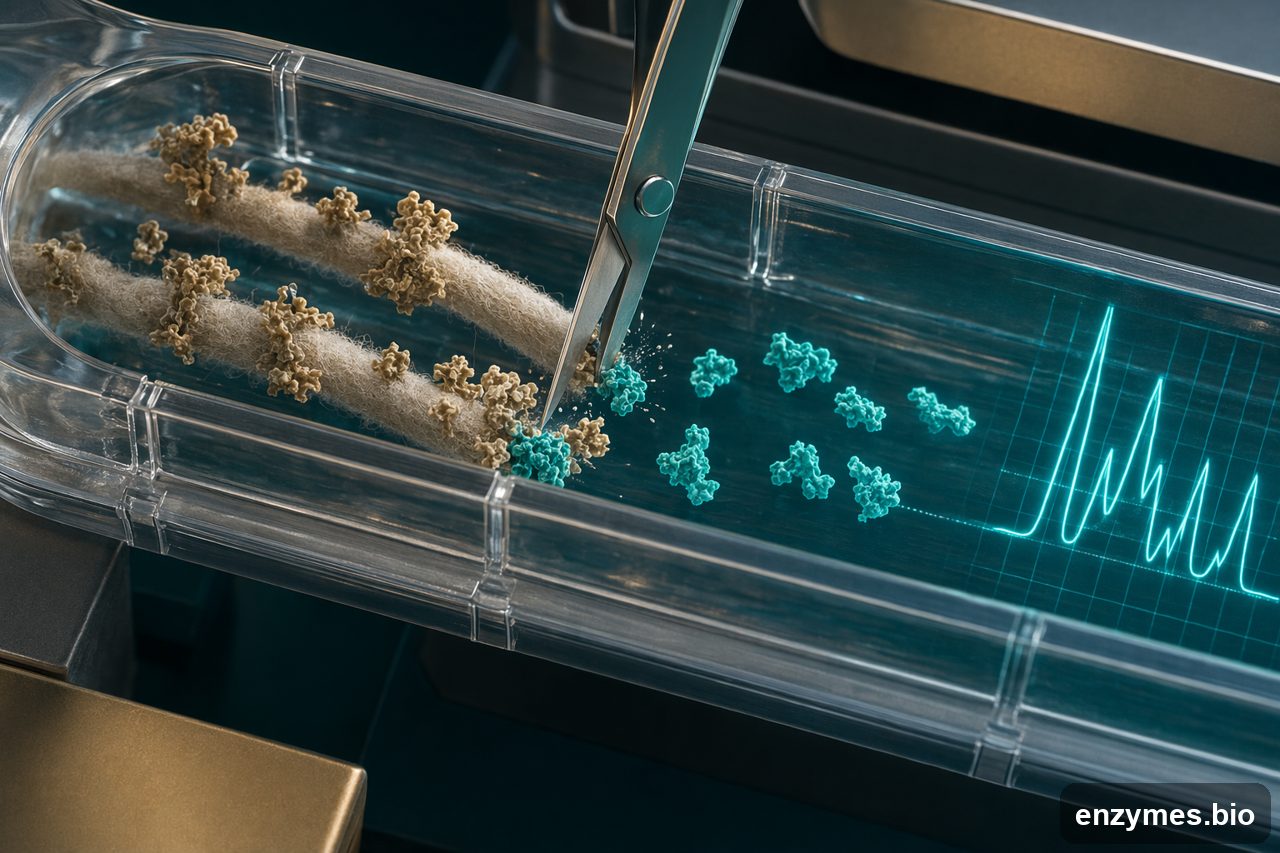
Neutral protease treatment is highly process-dependent. Small changes in bath chemistry, mechanical action, or dwell time can change fiber response. Aequion recommends building the treatment around a controlled validation plan rather than transferring conditions directly from unrelated fabrics.
Key variables to define during trials:
Aequion does not recommend treating neutral protease as a fixed-dose commodity input. The right addition level depends on the fiber, process intensity, and finishing target.
For first-stage trials:
Practical handling notes:

Controlled treatment requires a defined stop step. Depending on the fabric tolerance and finishing sequence, mills may use a validated combination of rinse, temperature shift, pH adjustment, or auxiliary change to stop further proteolytic action.
A weak stop step can create delayed fiber weakening, shade inconsistency, or variable handle after drying. For production, the stop method should be part of the batch record and confirmed during scale-up.
Neutral protease can be supplied for direct textile use or for formulation into auxiliary products. Formulators should evaluate stability against the complete blend, including wetting agents, dispersants, salts, preservatives, fragrance components, anti-foams, and trace metal interactions.
Recommended formulation checks include:
Aequion supports B2B procurement with documentation aligned to industrial purchasing and technical review. Available documentation can be discussed based on grade, market, and destination requirements.
Procurement teams commonly request:
Neutral protease should be reconsidered if the process requires aggressive fiber removal, uncontrolled degradation, high-oxidant chemistry, or conditions outside the enzyme’s practical stability window. It is also not a substitute for proper fabric preparation, mechanical process control, or finish compatibility testing.
If strength retention, shade stability, or garment dimensions are critical, pilot validation is essential before production release.
Share the fiber type, fabric construction, target finish, process conditions, auxiliaries, packaging preference, and estimated demand. Aequion will respond with a suitable grade recommendation, sampling path, and commercial pricing.



Tell us your application and target volume — our team replies with pricing, lead time, and the current specification sheet.